
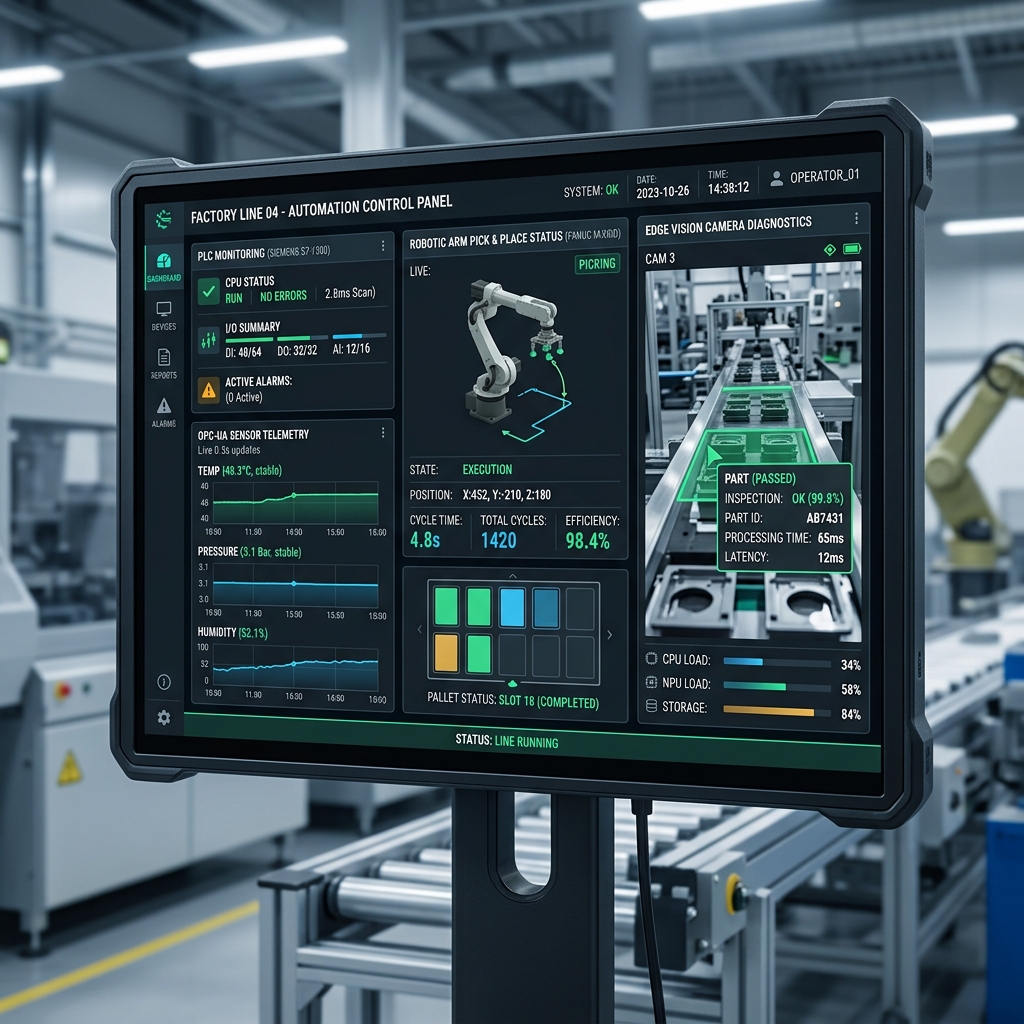
A Tier 2 automotive components group transformed its existing manufacturing environment into an intelligent operating system — connecting machines, materials, processes and enterprise systems without replacing the factory already in place.
A mix of legacy and modern machines operated across machining, forging, heat treatment and warehousing. Machine data remained within individual equipment. Material movements depended heavily on operators, manual records and disconnected identification systems. Production, quality, warehouse and ERP information existed in separate systems, making it difficult to establish a single, real-time view of what was actually happening on the shop floor.
The plant could produce — but it could not continuously sense, understand and respond to its own operational reality.
Leadership could see what had already happened. What was missing was the ability to understand what was happening now, why it was happening, and what should happen next.
The challenge was therefore not simply to digitize the factory. It was to create an intelligence layer capable of connecting physical operations with business decisions.
IdentifYou did not replace the factory. It built intelligence around the assets, processes and systems already in place.
The transformation started at the physical layer, with intelligent edge devices connecting legacy and modern machines, capturing machine and process signals, and translating heterogeneous industrial protocols into meaningful operational events.
From there, machines, materials, movements, production processes, quality events and enterprise transactions were brought into a connected operating layer — creating the digital context required for AI-driven visibility, prediction and decision-making.
An intelligent edge device connected every machine — modern and legacy — capturing machine, PLC, CNC and sensor data across OPC UA, MQTT and other industrial protocols. The machines became connected intelligence nodes rather than isolated production assets.
Materials, pallets, bins and WIP received digital identities and became traceable across the plant. RFID, QR and location technologies connected physical movement with material, production order, quantity, process and location.
Work orders moved from ERP into the factory, while actual production events moved back into the digital environment. Planned production could now be continuously compared with what was physically happening on the floor.
Each component could be associated with its material, lot or heat, production order, machine, process, inspection and dispatch history — establishing a digital genealogy across the manufacturing lifecycle.
Vision inspection and process data were brought together with material and production context, enabling quality intelligence to move beyond defect detection toward identifying process drift and emerging quality risks.
Machine behaviour was continuously observed through the intelligent edge for predictive maintenance. SAP, MES, WMS, QMS, and analytics were connected through a common architecture, creating bi-directional flow between enterprise intent and physical execution.
With the factory connected, IdentifYou introduced an intelligence layer that could bring together signals that previously existed in isolation. A machine event could now be understood in the context of the production order, material, WIP, routing, quality status, machine capacity and delivery requirement.
This changed the role of data. It was no longer simply information to be viewed. It became information that could be understood, predicted and acted upon.
The factory evolved from reporting what happened to understanding what was happening — and increasingly determining what should happen next.
Consider a critical production machine stopping unexpectedly.
The event may trigger phone calls, manual investigation and delayed replanning. The breakdown is treated simply as a maintenance event.
The machine's edge device immediately captures the event. The Smart Factory already knows which order was running, how much quantity remains, where the material is located, what operations are pending, and which alternative machines are available.
AI evaluates the operational context and recommends the best response — from rerouting production to another machine, to moving material, adjusting the schedule or notifying the appropriate teams.
The machine breakdown is no longer simply a maintenance event. It becomes an intelligent operational event. The factory can understand the impact and respond accordingly.
| From | To |
|---|---|
| Disconnected machines | Connected intelligent machines |
| Manual material visibility | Real-time material and WIP visibility |
| Fragmented production information | Digitally executed production |
| Reactive quality inspection | Context-aware AI quality |
| Reactive machine maintenance | Predictive asset intelligence |
| Delayed operational decisions | Real-time decision support |
The transformation created a connected operational foundation in which the physical factory and enterprise systems could continuously exchange information.
Most importantly, the factory moved from data collection to operational intelligence. It became capable of sensing its environment, understanding operational context, recommending decisions and initiating action.
IdentifYou approaches Smart Factory transformation from the factory outward — not from technology inward. Existing machines, legacy equipment, material handling systems, operators and enterprise applications remain part of the transformation.
The difference is the intelligent architecture that connects them.
FROM AN EXISTING FACTORY
IdentifYou
Intelligent Manufacturing. Connected Operations. Smarter Decisions.
We don't replace the factory.
We connect it, understand it and make it intelligent.