Transforming Routine Procurement from Manual Processing to Intelligent Automation
Industry: Automotive & Engineering ManufacturingFunction: Procurement OperationsFocus: Standard Items • Routine Purchases • Replenishment
Routine Procurement Creates a High-Volume Operational Burden
Procurement teams in manufacturing operate across thousands of purchase requirements every day, spanning raw materials, standard components, consumables, maintenance spares and other frequently purchased items across multiple plants. While many of these purchases are routine, each decision still depends on multiple pieces of information being reviewed and interpreted before action can be taken.
A buyer may need to check current and usable inventory, historical consumption, open purchase orders, pending deliveries, production requirements, supplier lead times, supplier availability, previous purchase prices and outstanding commitments before deciding what needs to be purchased, when it should be purchased and from whom.
As procurement volumes grow, this decision-making becomes increasingly dependent on manual monitoring, spreadsheets, ERP searches, emails, supplier calls and individual buyer experience. Procurement teams spend valuable time searching for information and following up on transactions rather than focusing on higher-value decisions.
This creates a recurring set of operational challenges:
The fundamental challenge, therefore, is no longer simply having procurement data available in an ERP system.
The real challenge is transforming that data into timely procurement intelligence—automatically identifying what needs attention, understanding why it matters, determining the potential business impact, and guiding the procurement team toward the right action.
“Here is the procurement data. Find the problem.”
To
“Here is what requires your attention today, why it matters, what could happen if you do nothing, and what action you should take.”
This is the foundation for moving from transaction-driven procurement to intelligent, proactive procurement operations.
The AI-Powered Approach
From Monitoring Every Transaction to Managing Only What Matters
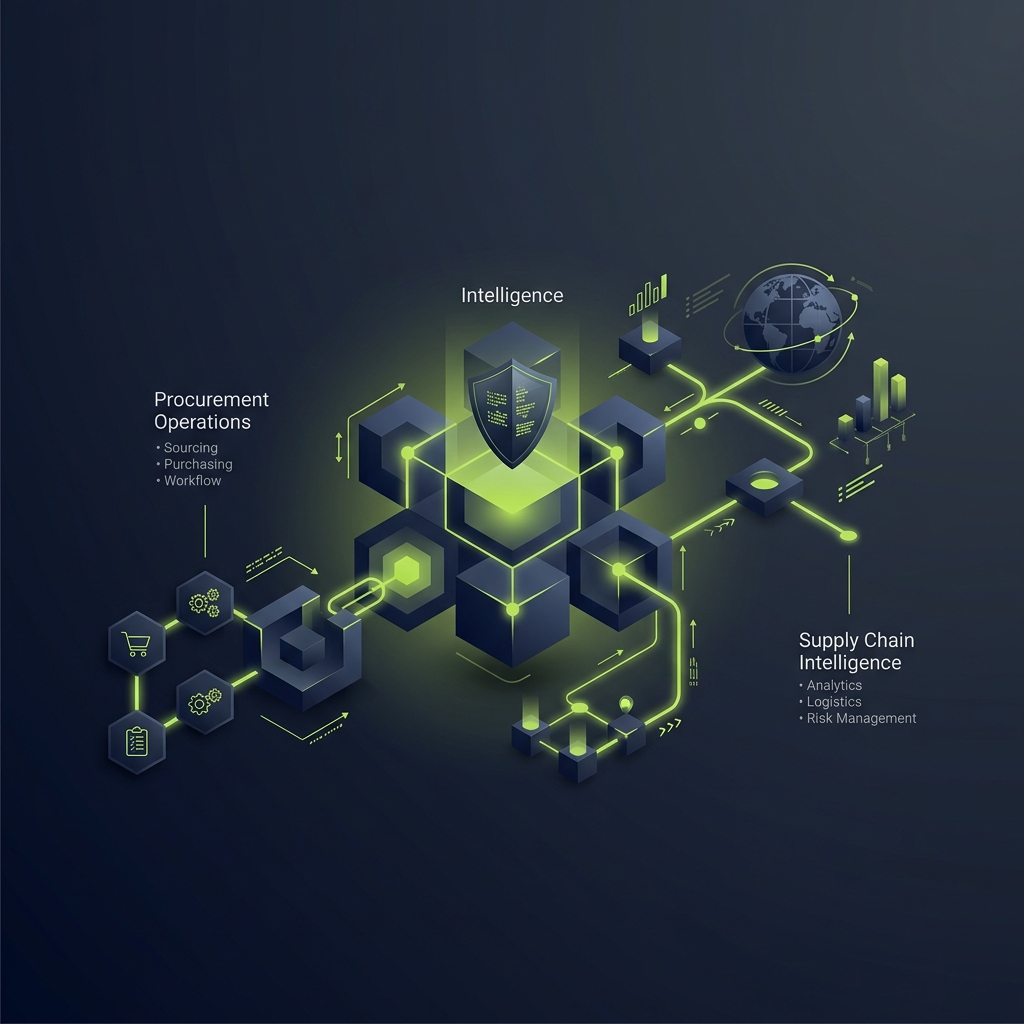
IdentifYou adds an AI-powered operational procurement intelligence layer over the organization’s existing ERP, procurement and business systems—without requiring procurement teams to replace the systems they already use.
Instead of making buyers search through ERP transactions, spreadsheets, open purchase orders and supplier records to determine what requires attention, IdentifYou continuously brings these signals together and interprets them in the context of the business.
AI continuously analyzes:
Inventory + Consumption + Demand + Open POs + Production Requirements + Lead Times + Supplier Performance + Historical Prices + Procurement Policies + Business Rules
to understand the current procurement position, detect emerging requirements, identify risks and determine where intervention is needed.
The platform moves procurement from reactive transaction processing to proactive decision-making:
SENSE → UNDERSTAND → PREDICT → RECOMMEND → ACT → MONITOR
The objective is not to give procurement teams another dashboard filled with data. It is to give every buyer a continuously prioritized view of what requires attention.
Instead of:
“Here are 10,000 purchase records. Find what needs attention.”
IdentifYou delivers:
“These 12 requirements need attention today. Three may cause production shortages, two suppliers are likely to miss their commitments, four purchase prices are above expected levels, and three orders can be safely deferred based on current inventory and demand.”
Every recommendation can be supported by explainable AI, confidence levels, business rules and the underlying procurement signals, allowing buyers and managers to understand why the system is recommending an action—not simply accept a black-box decision.
Human-in-the-Loop by Design
IdentifYou does not attempt to remove the procurement professional from the decision.
It augments the buyer's experience with continuous intelligence.
The AI identifies patterns, anticipates risks, prioritizes exceptions and recommends actions. The procurement professional validates, overrides or approves the decision based on commercial relationships, business context and organizational policy.
Every buyer interaction then becomes another source of learning, enabling the system to continuously improve its recommendations over time.
Intelligent Procurement Automation
AI Demand & Replenishment
Predict upcoming requirements by analyzing consumption patterns, inventory position, open orders and supplier lead times.
AI identifies what to buy, when to buy and how much to buy.
Intelligent Purchase Recommendations
Generate purchase recommendations using inventory, demand, MOQ, lead time, supplier and procurement policies.
Requirement → AI Recommendation → Buyer Approval
Automated Supplier Selection
For established standard items, AI recommends the appropriate approved supplier using price, delivery performance, quality and historical purchasing patterns.
Exception Intelligence
Instead of monitoring every transaction manually, buyers receive alerts for situations that require attention:
Stock-Out Risk • Excess Inventory • Delayed PO • Price Anomaly • Supplier Risk • Unfulfilled Requirement
Procurement Workflow Automation
Approved recommendations can trigger downstream procurement workflows, reducing repetitive activities between requirement identification and purchase execution.
From Transaction Processing to Intelligent Procurement Operations
Traditional
Monitor → Check Data → Analyze → Select Supplier → Create PO → Follow Up
AI-Powered
Sense → Predict → Recommend → Approve → Automate → Manage Exceptions
The buyer moves from processing every transaction to managing the exceptions and decisions that require human judgment.
Making Procurement Faster, Smarter & More Scalable
Higher Buyer ProductivityReduce repetitive data analysis, supplier checks and transaction-processing activities.
Improved Inventory EfficiencyAlign replenishment decisions with actual consumption, inventory and demand signals.
Reduced Stock-Out RiskIdentify potential shortages before they become urgent procurement requirements.
Faster Procurement CyclesAccelerate routine purchasing from requirement identification to execution.
Better Supplier ExecutionContinuously monitor supplier commitments and surface delivery exceptions.
Scalable OperationsSupport increasing procurement volumes without proportionally increasing manual effort.
AI That Works Within the Procurement Process
IdentifYou combines manufacturing domain expertise, procurement intelligence, AI, data engineering, ERP integration and process automation to build intelligent procurement operations.
The objective is not to automate procurement blindly.
It is to create an operating model where:
AI Predicts → AI Recommends → Automation Executes → Humans Manage Exceptions
Automate the routine. Surface the exceptions. Empower the buyer.